




Cannabis Pests: Know Your Enemy, Protect Your Plants
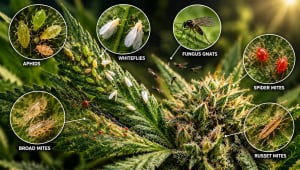
- 1. Fungus gnats
- 2. Whiteflies, aphids and thrips
- 3. Mites
- 4. Outdoor and caterpillars
Whether you're growing cannabis indoors or outdoors, pests can become a serious problem. Some are easy to spot, while others are so tiny they can go unnoticed until the damage becomes visible.
Each pest has its own characteristics, so knowing how to identify it, understand the damage it causes, and choose the right control method is essential. Regular inspections and proper prevention can help reduce the risk of infestations and catch problems early.
In this guide, we'll cover the most common cannabis pests, how to identify them, and the best ways to prevent and control infestations.
Fungus Gnats
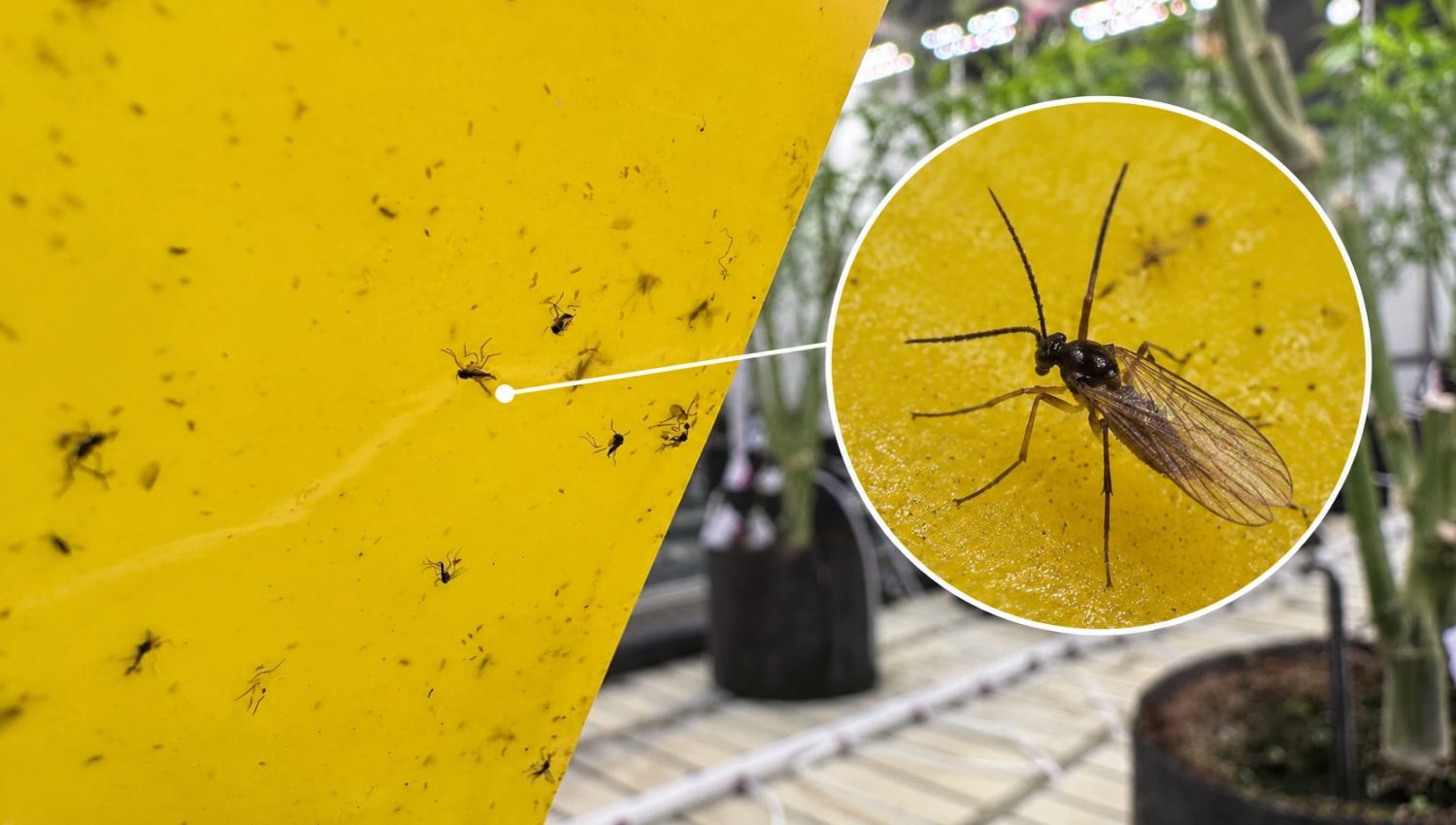
Fungus gnats are tiny black flies often seen around plants or on the surface of the growing medium. Adults generally cause little direct damage, but their larvae develop in moist growing media and can damage the delicate roots of young plants when populations are high.
Prevention:
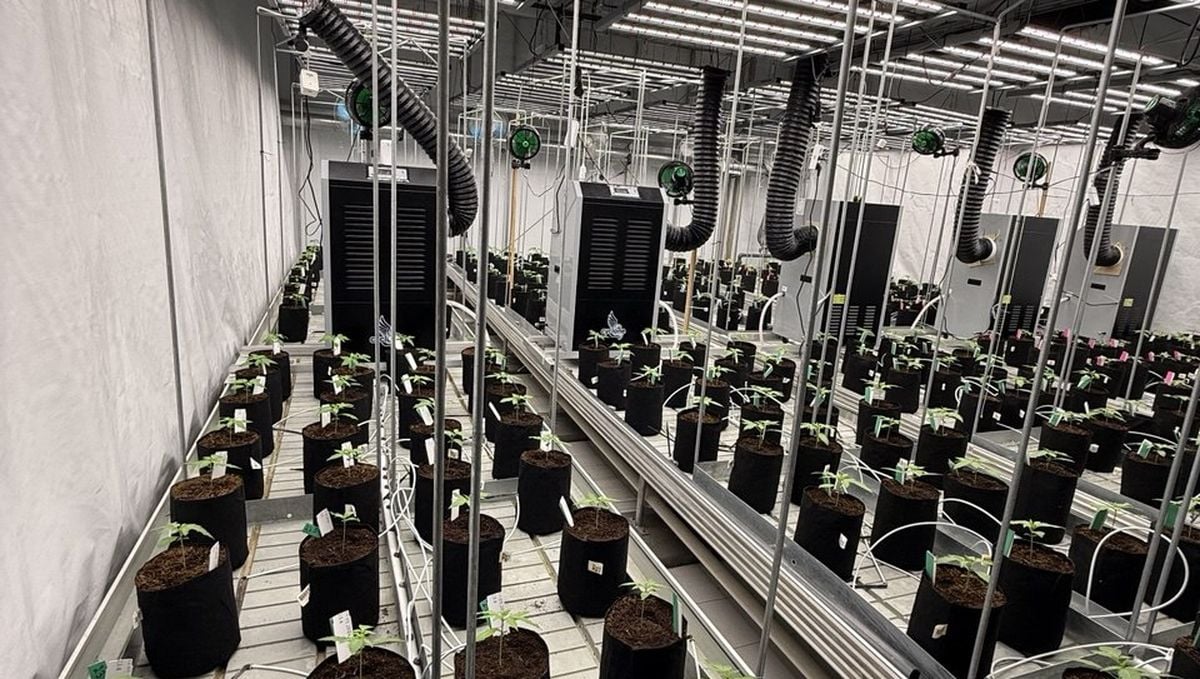
Avoid overwatering. This isn't a treatment for an existing fungus gnat infestation, but a preventive measure that helps make the growing medium less favorable for them. You can read more about how to water different types of substrate in our article: The Ultimate Guide to Watering Your Cannabis Plants for Maximum Growth and Yield
Use yellow sticky traps.
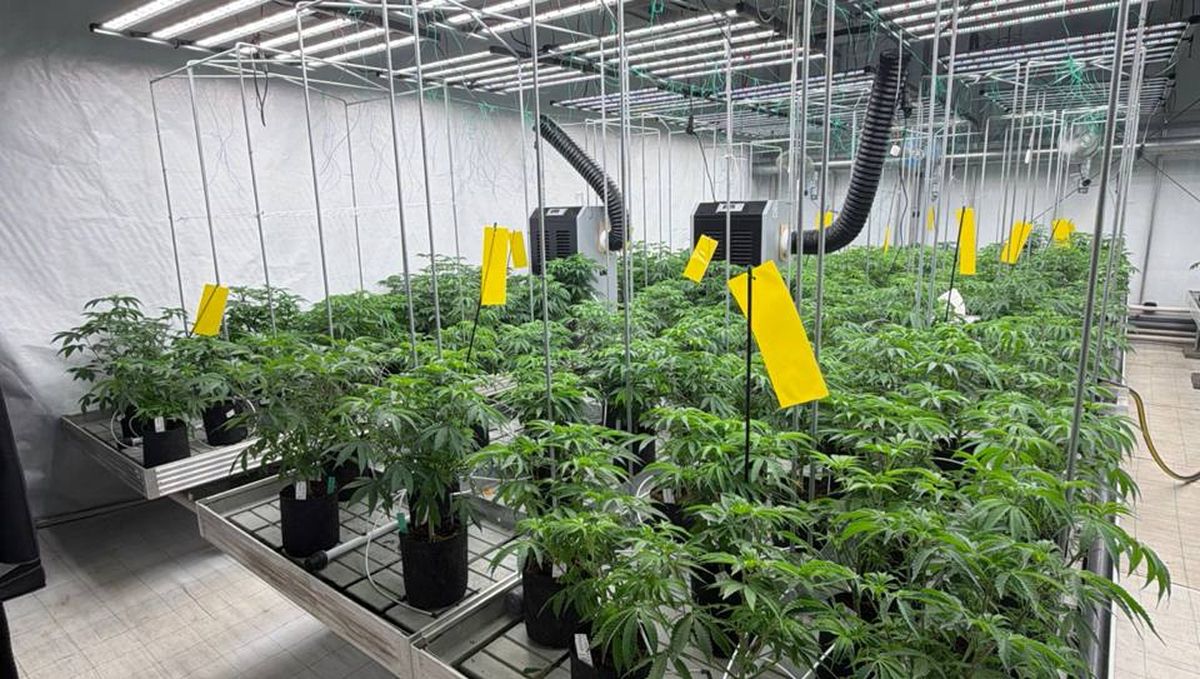
These traps catch adult flies and help monitor their population. However, they don't eliminate larvae in the growing medium, so it's best to combine them with other control methods.
Biological control.
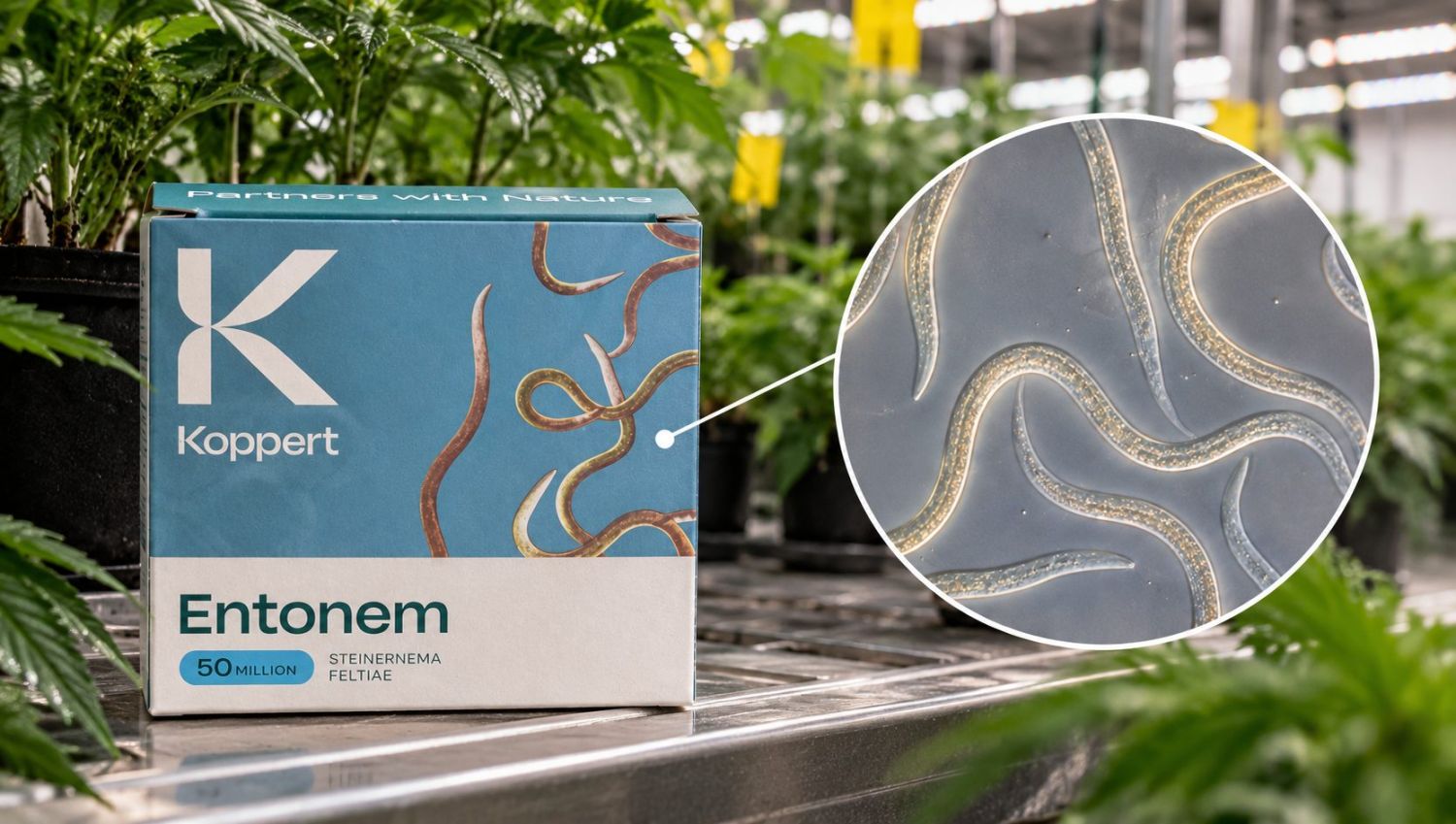
Using beneficial nematodes is a relatively new and effective approach to controlling fungus gnats. For example, аt our breeding facilities, we have begun using this extensively, and we are already seeing positive results. Entonem by Koppert contains Steinernema feltiae, microscopic nematodes that infect fungus gnat larvae in the growing medium and help reduce their population. Follow the manufacturer's instructions for best results.
Whiteflies, Aphids and Thrips
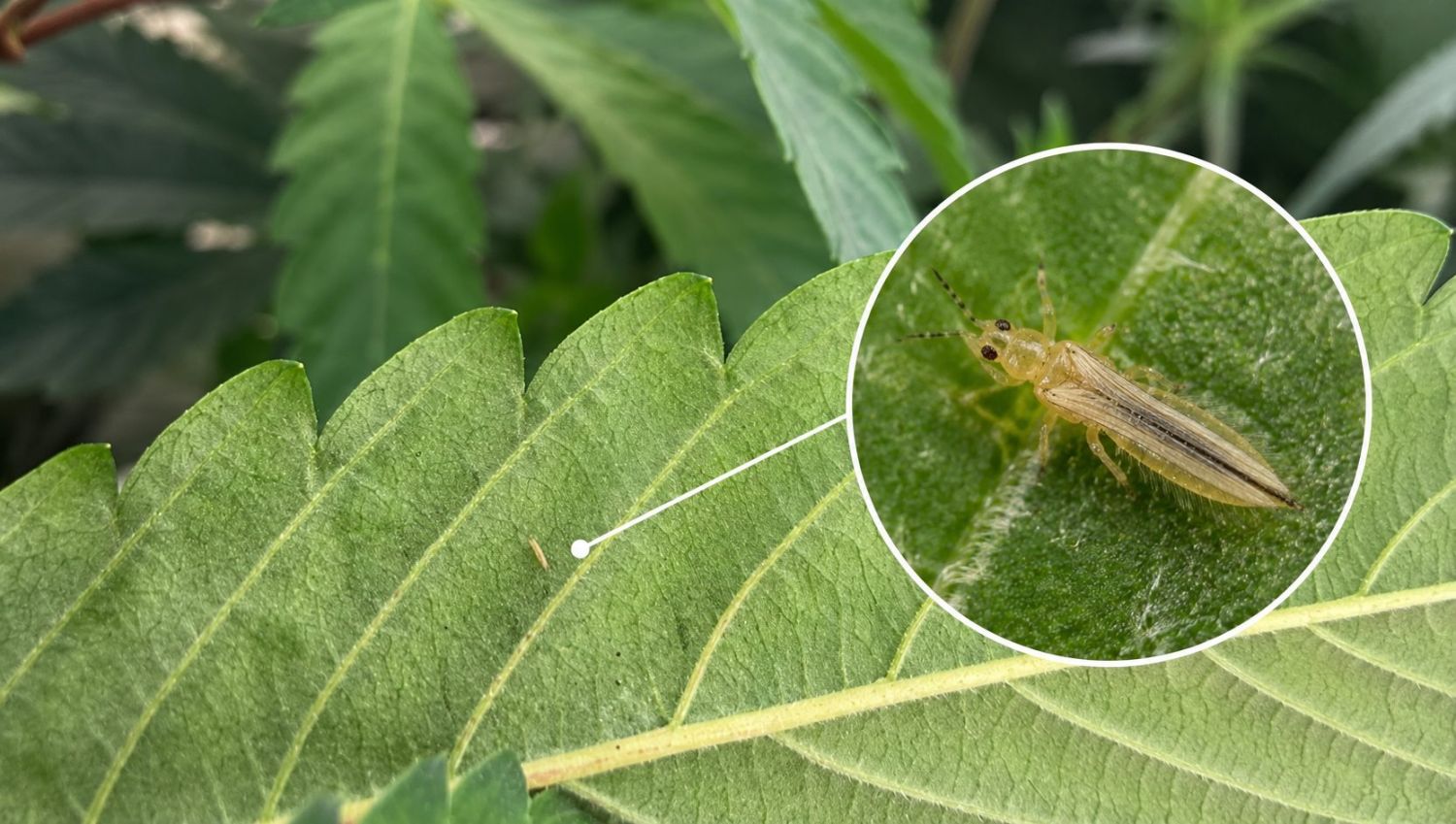
Whiteflies, aphids and thrips are common cannabis pests that feed on plant sap, weaken plants and damage foliage. Whiteflies tend to fly off the leaves when disturbed, aphids often gather in colonies on young shoots and the undersides of leaves, while thrips leave distinctive pale or silvery marks on leaf surfaces.
Regular inspections.
Check your plants every few days, paying close attention to the undersides of leaves and young shoots. The earlier you detect pests, the easier it is to keep an infestation under control.
Yellow sticky traps.
Place traps near your plants to monitor adult whiteflies and winged aphids. They can also help detect thrips, although blue traps are often used for thrips monitoring. Keep in mind that sticky traps help track adult insects but won't eliminate an infestation on their own.
Spray treatments.
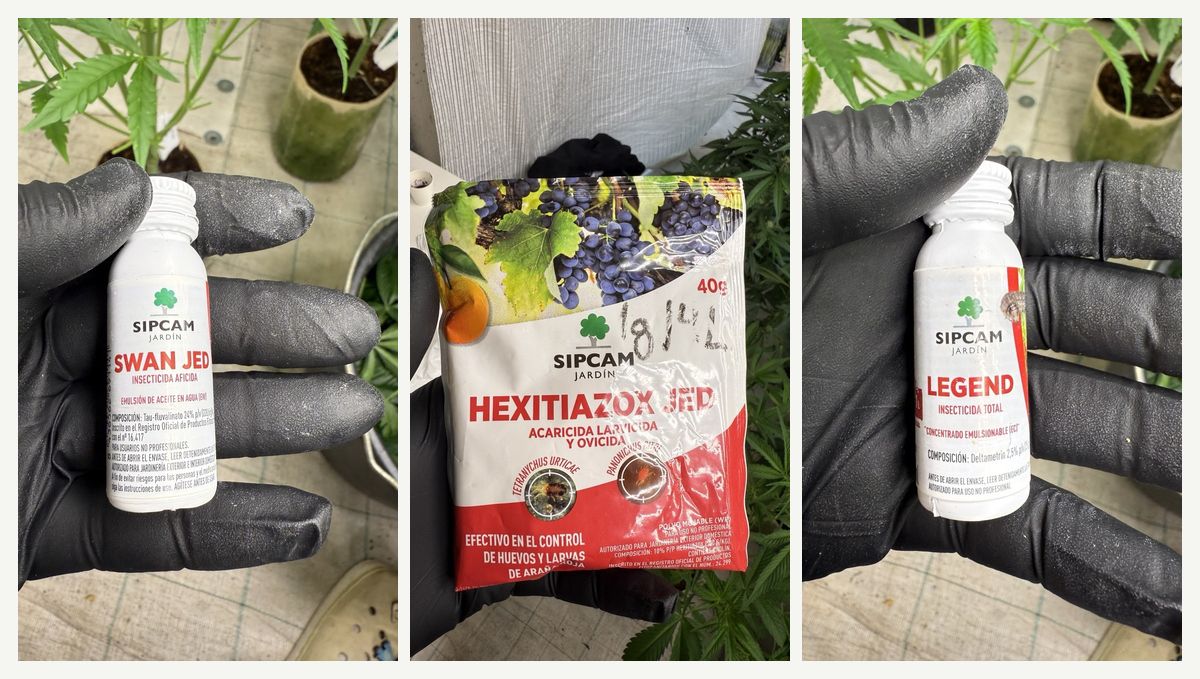
In our growing practice, we alternate Swan and Legend, both pyrethroid insecticides, at three-day intervals. As our base treatment, we use Hexitiazox JED, an acaricide designed to target specific mite life stages. A few drops of liquid soap may be added to the spray water if it is compatible with the products being used and does not cause leaf damage. Always follow the manufacturers' instructions and observe the permitted application intervals.
Mites
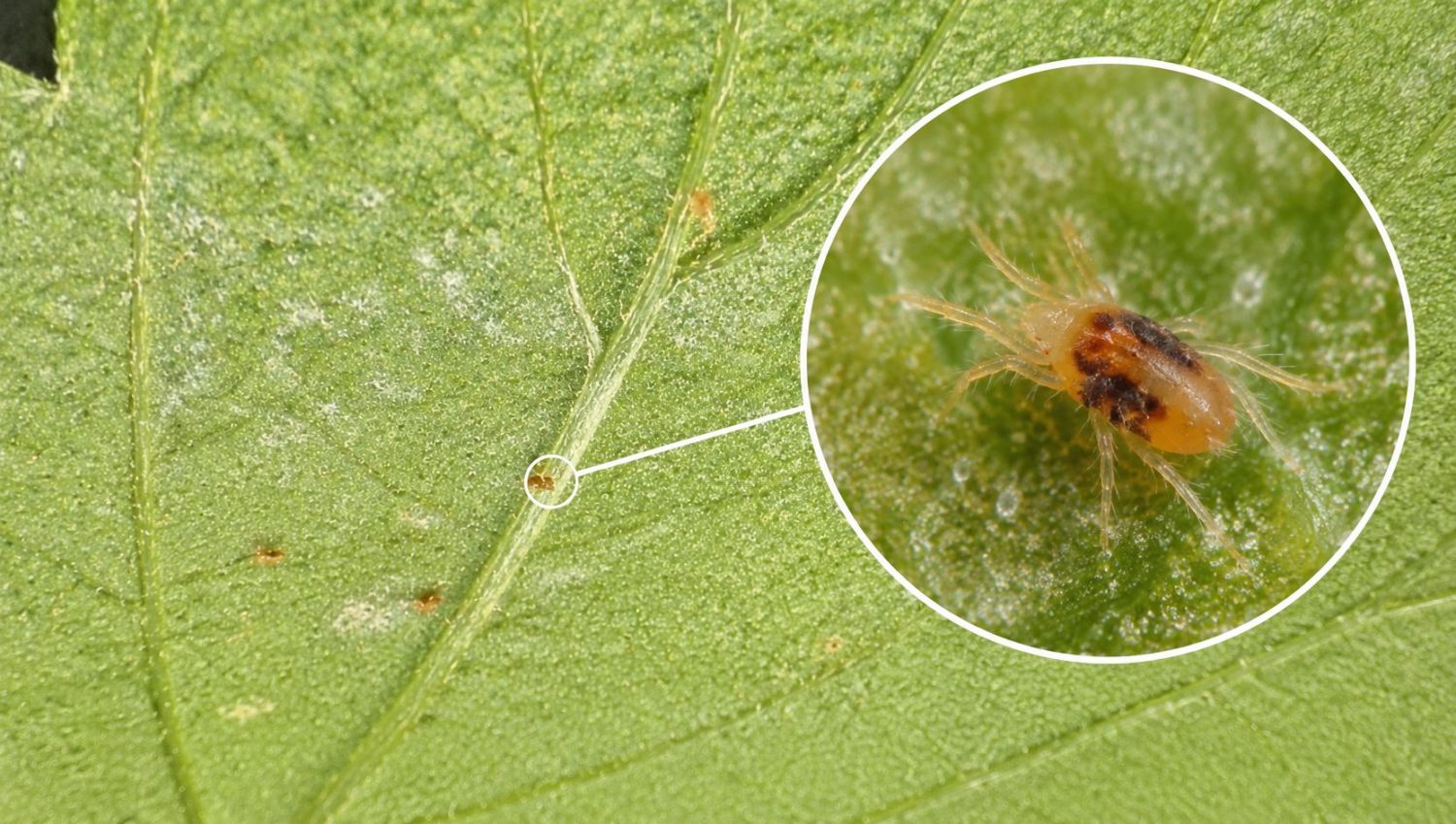
Mites are among the most insidious cannabis pests. They're so tiny that infestations often go unnoticed until significant damage has already occurred. Severe infestations can weaken plants, stunt their growth and lead to substantial crop losses.
Different mite species cause different types of damage. Spider mites leave tiny pale spots on leaves and can cover them in fine webbing when infestations become severe. Broad mites attack young leaves and growing tips, causing new growth to twist and become distorted. Russet mites can cause bronzing on leaves and stems and may also damage flowers.
Inspect your plants regularly, especially the undersides of leaves and young shoots. Use a hand lens or microscope, as some species are almost impossible to spot with the naked eye. The sooner you detect mites, the better your chances of stopping them before they cause serious damage.
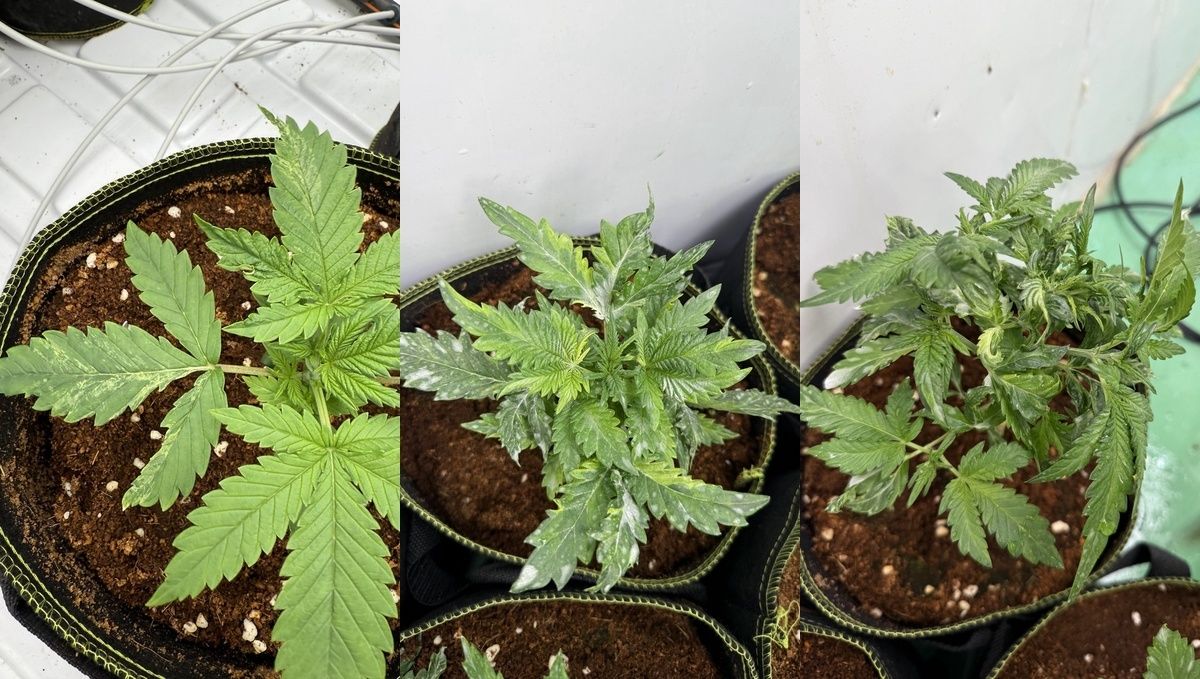
As we discovered, a sulfur-based products, containing 80% sulfur, helped us tackle a serious mite infestation. Mites can spread quickly from one plant to another, turning a localized problem into a threat to the entire grow.
We treated the plants over a period of approximately two months. Even after the visible mites had disappeared, we continued monitoring the plants. Under a microscope, we could still see eggs. In our observations, newly hatched mites also died as treatments continued, and we eventually managed to bring the infestation under control.
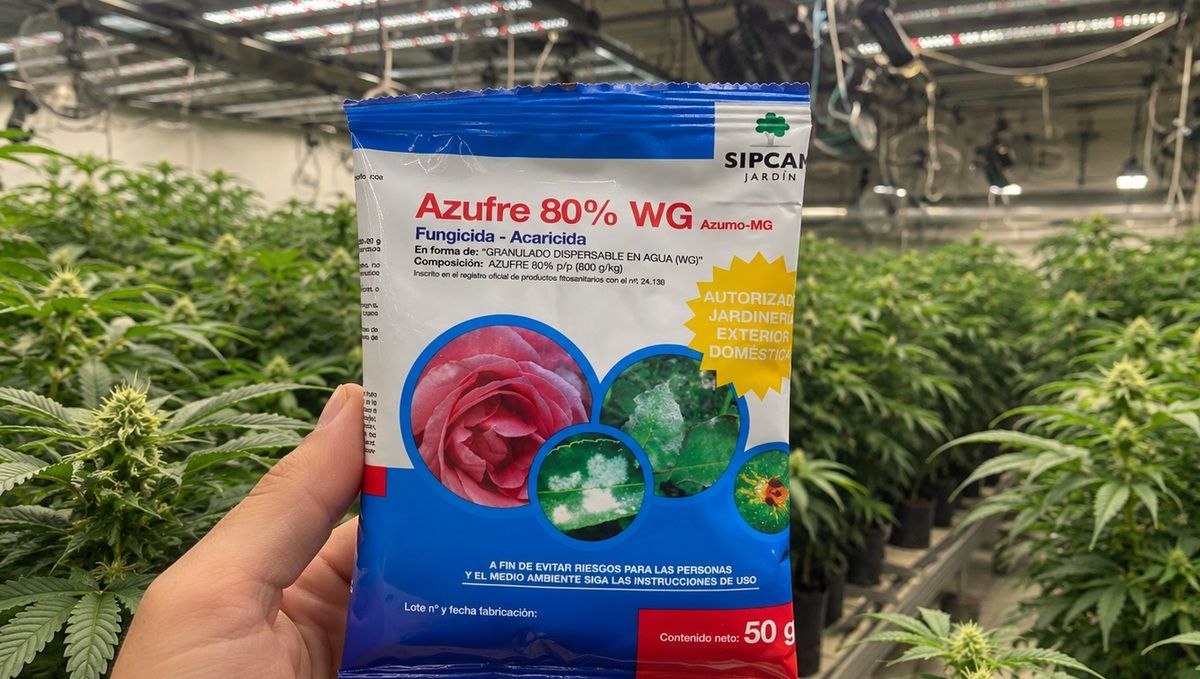
The key lesson is not to rely on what you can see with the naked eye. Even after mite numbers decline, keep inspecting your plants closely so you can spot signs of a resurgence early.
Important: this describes our specific experience, not a universal treatment schedule. Application frequency and whether a sulfur product can be used on a particular crop must follow the manufacturer's label. Sulfur can also damage foliage at high temperatures and is incompatible with certain oil-based products.
Outdoor and Caterpillars
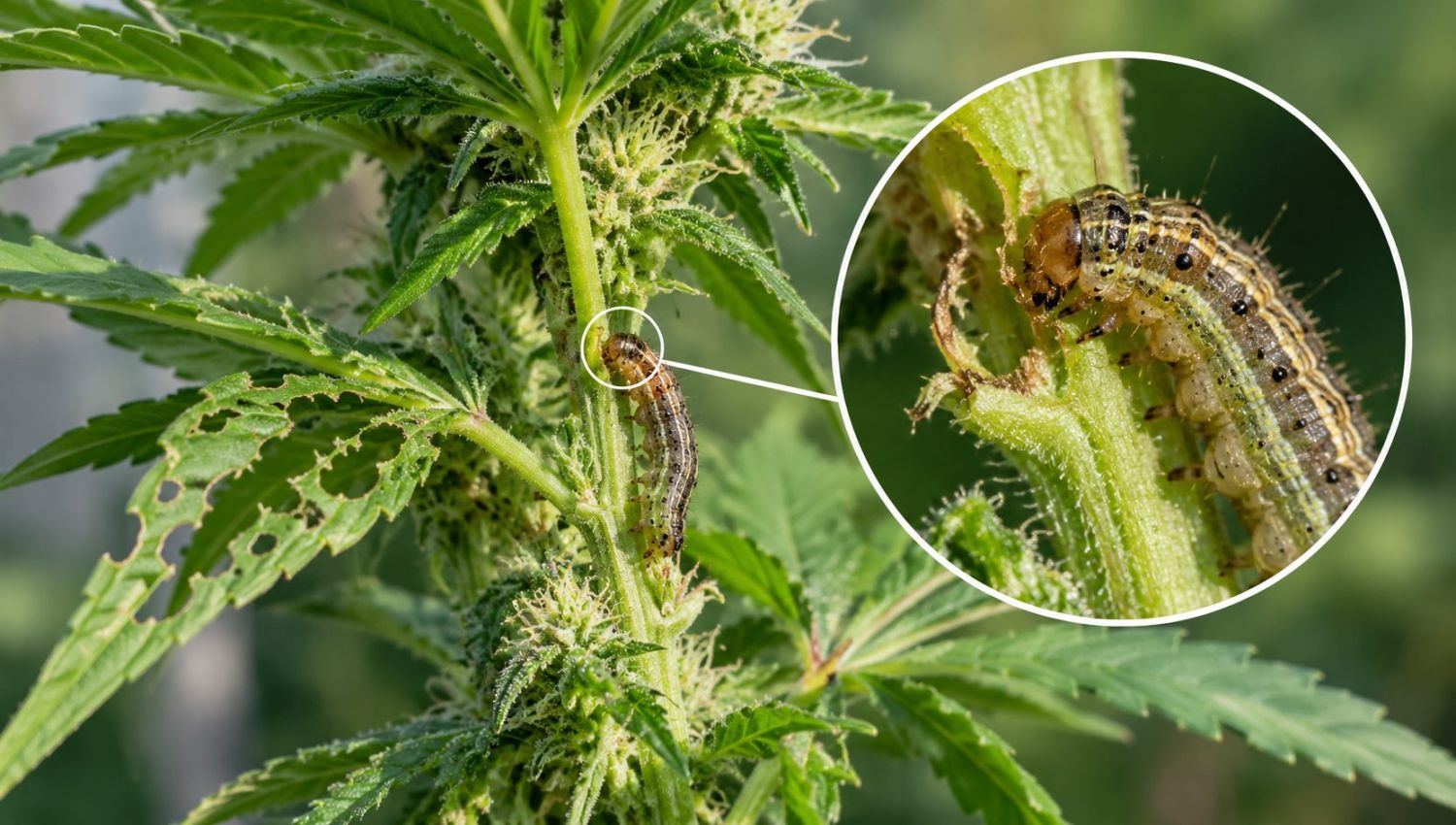
Caterpillars are one of the most frustrating problems when growing cannabis outdoors. They can quickly chew through leaves, damage shoots and hide inside flowers, where they're much harder to spot. Some species also leave droppings that can contribute to bud rot. If left unchecked, caterpillars can cause serious damage to both plants and yields.
Hand-picking in our experience, the simplest approach is to inspect plants regularly and remove every caterpillar you find by hand. Check both sides of the leaves, young shoots and flowers. Don't rely on a single inspection - keep checking for new caterpillars before they cause further damage.
Conclusion
Today, we've covered the main cannabis pests, how to recognize the signs of an infestation, and the control methods we use in our own growing practice.
Remember: the sooner you spot a problem, the easier it is to get it under control.
Inspect your plants regularly, keep an eye on their health, and don't ignore even small changes in leaves or shoots. Prevention and early action can make all the difference in protecting your plants and your harvest.
The Fast Buds team wishes you healthy plants, chunky buds, and bountiful harvests! 🌱
Comments